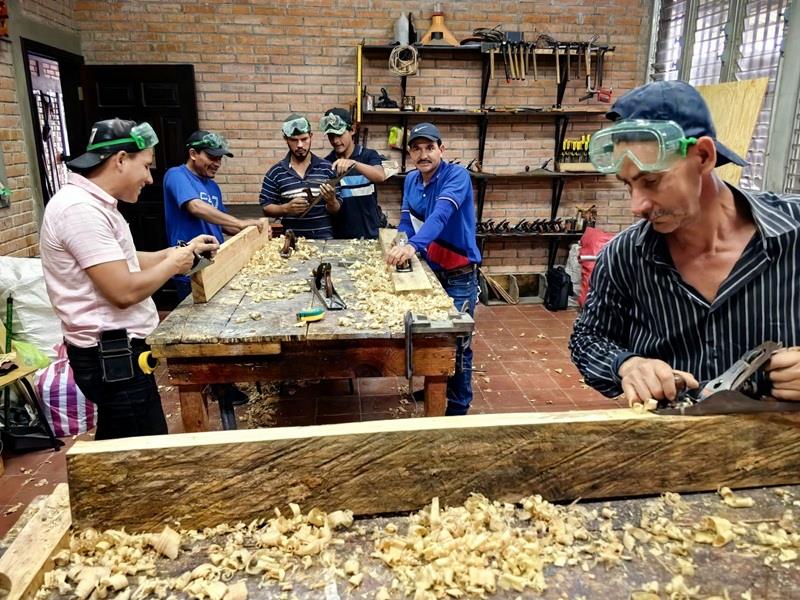
This past May, in Santa Rita, Copán, Honduras our district’s International Project Alliance launched a new program of classes. Those classes were offered by ETAOO, a local non-profit trade school, and sponsored by a new partnership of the Rotary Club of Copán Ruinas and fourteen Rotary Clubs in District 5050 that form the International Project Alliance (IPA). Established in 1989, ETAOO is a non-profit trade school in Santa Rosa de Copán, Honduras, committed to community development through education and skills training. For three decades, ETAOO has offered many courses, including gastronomy, carpentry, barista skills, beauty and cosmetology, electrical work, barbering, welding, and computer skills, among others.
Needs for trade school education have long gone unmet in the 40 rural villages around Copán Ruinas where for ten years the IPA has been working. We have sponsored numerous successful programs and individual students within the traditional schools in the area. Each village has a primary school, and many have middle schools, that emerged from this partnership of Rotary clubs. But these 60 small villages have not been able to offer more specialized education, focused on the occupations needed in the region, because of the small population base in the individual villages.
Fortunately, the IPA works with many small villages that all share this need, challenging us to explore, with the villages, the possibility of a collaborative solution. Our Club, under the leadership of Mark Lascelles (Anacortes) and Walt Guterbock (Fidalgo Island), and logistical work of our in -country contractors, identified families who might have students interested in the idea of expanded offerings. Concurrently we were able to find an educational organization with an excellent reputation already conducting trade education in Honduras. That group, ETAOO, was operating in the town of Santa Rosa a couple of hours from Copán Ruinas from where the IPA operates. Meetings to explore the feasibility and nature of expanding their offerings led over time to a successful contract under which a new set of classes to meet the needs of IPA villages was established.
Interests in trade education have been great in the villages, but not a sense of how those needs might be addressed. That type of awareness and serving as a neutral broker and financial supporter was something IPA could bring to the table. Getting funding by the local school system was not a possibility given how far their resources were stretched already. However, we knew our alliance of Rotary Clubs could foster the planning and bring together the needed funding and do so in a sustainable fashion.
A contract with ETAOO for facilities, equipment and teachers was negotiated and signed. Tuition and fees for each student was funded by the IPA. Each student paid for transportation from their village to and from the school. Because of those costs, and the ongoing need for students to work in support of their families, a scheme was devised to bring these mostly adult students to the school on Saturdays.
Villages will rarely send more than two students since villages are small and the program, although inexpensive, is not free. After a ride to school of 30 minutes or so students will attend class and return home that day. Admittedly these school days will be grueling, but students are highly motivated and well aware of the challenges their remote locations pose for continuing their education.
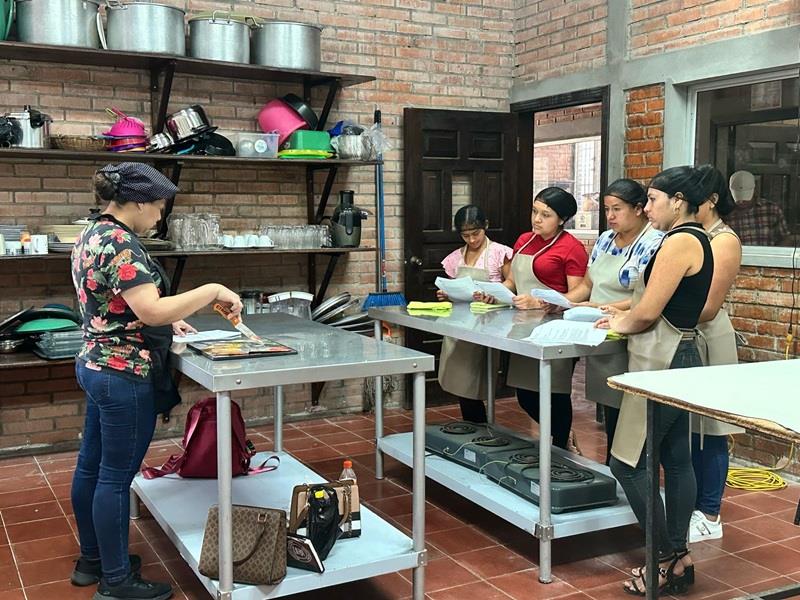
Village needs and family interests led IPA to float a proposal for a partnership initially offering education in four trades: carpentry, sewing, gastronomy and cosmetology. These are trades for which there are needs in the region, if not in every village. Fortunately, given ETAOO’S other offerings, there was no need to purchase equipment to launch these programs, using the existing facilities at the public Cashapa secondary school in Santa Rita. The IPA did agree to maintain the machines.
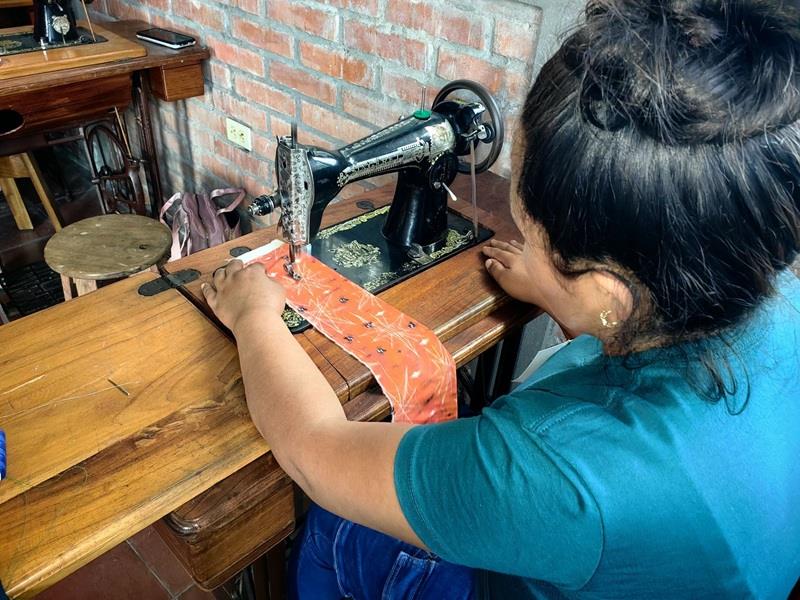
Pictures that accompany this article were taken on the first day of class. Excitement among students, teachers and Rotarians was palpable. For some it was the culmination of a lot of planning. For others it was the opening of a door to new work opportunities, and the hope they’ll be bringing salaries back to their villages.
If you would like more information about or are interested in joining the International Project Alliance, please contact Marty Pease of the La Conner Club or at 720-291-1979. While Rotary Clubs from Canada, the United States, and Honduras constitute the bulk of the membership, individual Rotarians and friends are welcome to join and/or contribute to these projects and Club activities.